
On Friday, August 21, 2026, a boxing gym patio in Deep East Oakland became a place for history, food, youth leadership, financial literacy, mindfulness, voter registration, and plain old neighbor-to-neighbor connection. The Black August Experience, hosted by the East Oakland Boxing Association and Youth ALIVE!, was not presented as a one-night solution to structural problems. It was something more useful: a practical example of how trusted community spaces can hold many kinds of learning and relationship-building at once. Oakland Post/Post News Group report [1]
This article is for Oakland donors, residents, community partners, and nonprofit leaders who want to understand what community investment looks like beyond a check. The problem it addresses is simple: how do we recognize meaningful local impact without exaggerating what one event can prove?
MFFCE Staff reviewed official EOBA materials, Youth ALIVE! information, local reporting, and MFFCE’s previous event coverage. The lesson is clear: strong community investment starts with people who already know the neighborhood, then gives them the room, resources, and relationships to build something relevant.
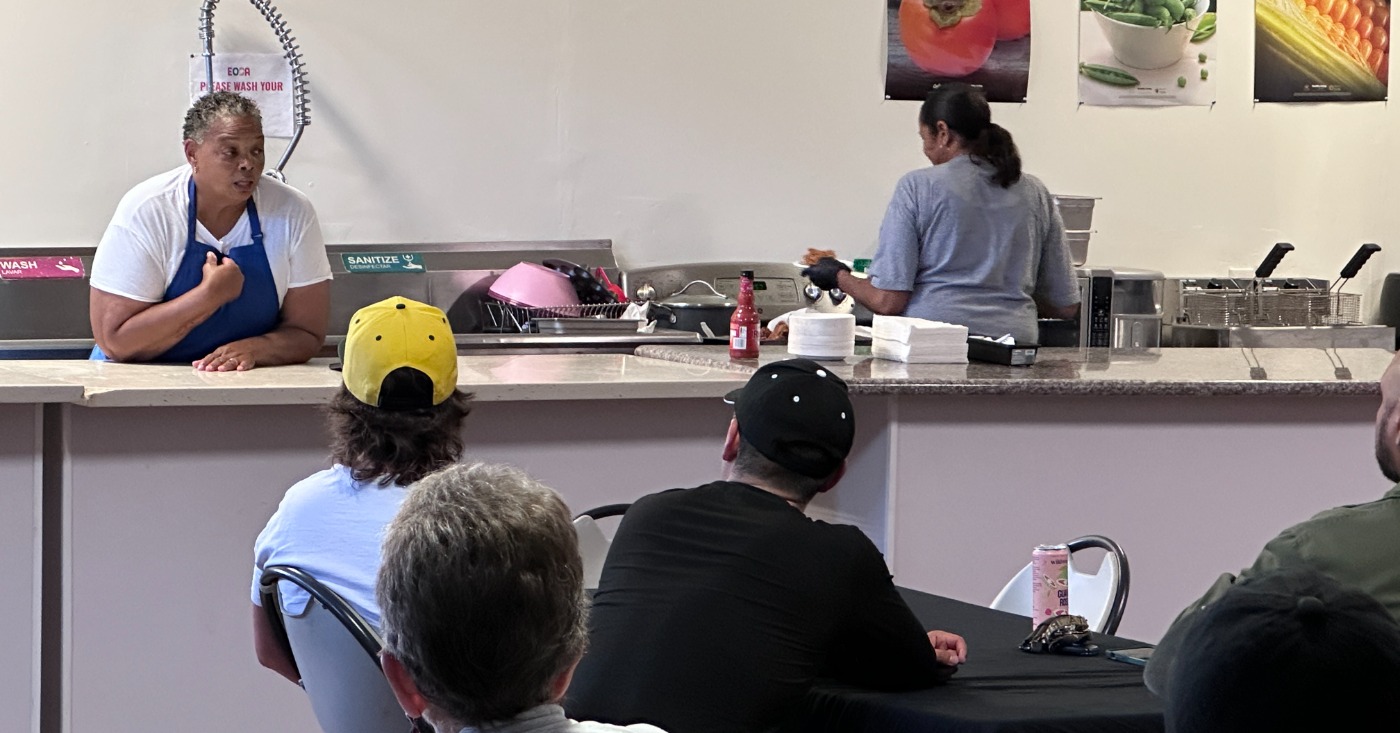
What the Black August Experience actually included
The 2026 event was the second annual Black August Experience organized by EOBA and Youth ALIVE! It was held at EOBA’s patio at 816 98th Avenue, Oakland, from 4:00 to 8:00 p.m. and was described as free and youth-centered. EOBA official event listing [2]
The event connected Black history and resistance to present-day tools for community participation. Documented activities included food tasting, financial literacy and mindfulness workshops, entrepreneurship and civic engagement content, a children’s Fun Zone, and voter registration with the League of Women Voters Oakland. Oakland Post/Post News Group report [1]
The mix matters. History without practical connection can feel distant. Practical workshops without history can feel unmoored. A community event can do both, especially when young people help shape the questions and the learning.
Event schedule at a glance
The hosts did not publish a minute-by-minute program. The table below lists the verified event window and activities described in official and local materials.
| Time or event window | Verified element | Why it matters |
|---|---|---|
| 4:00 to 8:00 p.m. | Community event at EOBA’s patio | Created a free, neighborhood-based gathering space. [2] |
| Throughout the event | Black August history and educational materials | Connected historical resistance to current community life. [1] |
| Throughout the event | Food tasting and cultural education | Used foodways to explore Black history, resilience, and culture. [1][3] |
| Throughout the event | Financial literacy and entrepreneurship content | Connected cultural learning to economic knowledge. [1][2] |
| Throughout the event | Mindfulness and wellness activities | Made room for reflection and care alongside civic learning. [1][3] |
| Throughout the event | Voter registration with LWV Oakland | Offered a direct pathway into civic participation. [1] |
| Throughout the event | Kids’ Fun Zone and outdoor gathering space | Supported intergenerational participation. [1][3] |
A case example in community investment
The Black August Experience shows what happens when a local event is designed as more than entertainment. Youth interns created posters and educational materials that helped participants connect traditional Black foodways, civic engagement, financial literacy, and education to the meaning of Black resistance today. EOBA Executive Director Dawna Williams described learning from the young people who shaped the program rather than assuming adults already had the full answer. Oakland Post/Post News Group report [1]
That detail is easy to skip. It should not be skipped.
The event’s tradeoff was that it held serious history in a format that also included food, children’s activities, conversation, and an outdoor lounge. That approach may not satisfy everyone who wants a formal teach-in, and it was not intended to replace deeper study or organizing. But it created several entry points for participation. A young person could encounter the history through a poster. A family could begin with food. A resident could register to vote. Someone else could pause for mindfulness or talk with a neighbor.
No attendance number, funding amount, or individual outcome is publicly documented in the sources reviewed here. So we should not claim that one Friday proved measurable long-term impact. What it does show is a thoughtful model for making history relevant, welcoming families, and building relationships around practical knowledge. That is a meaningful result in its own right, even before longer-term outcomes are assessed.

Lesson one: Trusted spaces are infrastructure
EOBA describes itself as a multi-service youth and community development hub that extends beyond boxing into workforce development, food justice, after-school enrichment, financial literacy, mentorship, and wellness. Its stated mission is to create a secure and enriching environment where people can thrive in education, health, wellness, and community engagement. EOBA, “About EOBA” [6]
That is community infrastructure. Not always the kind made of concrete and steel, but infrastructure all the same.
A trusted space lowers the barriers to participation. People are more likely to attend when the location is familiar, the event is free, children are welcome, and the hosts have existing relationships with the community. For donors, this is a useful distinction. Supporting a program may mean helping sustain the staff, equipment, communications, food, space, and coordination that make the public-facing moment possible.
The event is what people see. The relationships underneath it are the investment.
Lesson two: Youth leadership should be real, not decorative
Youth ALIVE! describes itself as an Oakland-based violence prevention, intervention, and healing agency. Its programs include peer education, violence interruption, hospital-based support, counseling, advocacy, and leadership development. Youth ALIVE!, official website [4]
EOBA’s youth programming similarly combines academic support, boxing and sports, creative design, culinary education, gardening, technology, theater, and paid youth leadership opportunities. EOBA, “Youth Programs” [7]
The Black August Experience reflected that broader approach. Young people were not simply invited to attend a program built entirely by adults. They helped shape how the event explained history and relevance. That is a different model of mentorship. It treats young people as contributors, interpreters, and decision-makers.
For funders, the practical question is not only, “How many young people attended?” It is also, “Where did young people have authority?” Did they help design the program? Were they paid or credited when appropriate? Did adults listen? Did the organization create a path for their ideas to continue?
Those questions reveal more about leadership development than a photo of a crowded room ever could.
Lesson three: Cultural education can be practical education
The event’s “Plate of History” connected foods such as black-eyed peas, johnny cakes, and fried chicken to Black history and resilience. EOBA’s recap describes the food tasting as a way to discuss how traditional foods were made and why they carry cultural meaning. EOBA, “Celebrating Black August At EOBA” [3]
This is the kind of education people remember because it begins with something tangible. Food opens a door. History walks through it.
The same principle applies to financial literacy and entrepreneurship. A workshop is stronger when it does not treat economic knowledge as separate from culture, safety, family stability, and civic power. Financial literacy can help people understand budgeting, debt, savings, and opportunity. Entrepreneurship education can help young people see local business ownership as a form of leadership and neighborhood participation.
None of that guarantees a business launch or a financial turnaround. It does create a practical learning environment where those conversations can begin.
Lesson four: Civic participation belongs in everyday community life
Voter registration was part of the event, with the League of Women Voters Oakland providing civic leadership and registration support. Oakland Post/Post News Group report [1]
That choice fits the event’s history. Black August, as described in EOBA’s materials, is a period of reflection, remembrance, education, and action connected to Black resistance and the pursuit of freedom and justice. EOBA, “Black August” [3]
Civic participation does not have to begin in a government building. It can begin at a neighborhood event, over a shared meal, or in a conversation between a young person and a trusted adult. The important thing is that information is accessible and participation is voluntary, informed, and connected to people’s actual concerns.
For donors, this is a reminder that community enrichment is not only arts programming or direct services. It also includes the civic habits that help residents understand systems, ask questions, and participate in decisions that shape their lives.
What this means for MFFCE
MFFCE’s Oakland-rooted approach centers community enrichment, arts and culture, youth development, education, and neighborhood revitalization. MFFCE, “Impact” [10] Those focus areas are visible in the Black August Experience without forcing the event into a grant-report template.
The gathering brought culture and education together. It created space for youth leadership. It linked wellness and mindfulness to community care. It made civic participation available in a familiar setting. It strengthened the role of EOBA as a neighborhood hub and highlighted Youth ALIVE!’s healing-centered, community-based work.
MFFCE’s previous coverage of Youth ALIVE! also emphasizes the importance of organizations that meet people with trust, practical support, and long-term relationships. MFFCE, “Healing on the Frontlines” [9]
The donor lesson is not that one event proves a program works. It is that sustained investment can help trusted organizations keep creating the conditions where learning, leadership, culture, and connection are possible.
What Smart Critics Argue
Criticism: One community event cannot prove long-term impact.
Correct. A single gathering cannot establish changes in safety, economic mobility, civic participation, or youth outcomes. The responsible response is to document what happened, avoid inflated claims, and evaluate longer-term relationships and program outcomes separately. [1][2]
Criticism: Mixing history with food, games, and entertainment could dilute the seriousness of Black August.
That concern deserves respect. But the documented program did not remove history. It used posters, youth-created materials, food education, and workshops to make the history accessible to more people. Different formats can coexist when the content remains accurate and the community is treated as capable of engaging deeply. [1][3]
Criticism: Donor storytelling can turn community work into institutional self-promotion.
Also fair. Donors should not present themselves as the protagonists of work led by EOBA, Youth ALIVE!, young people, families, and local partners. The better approach is to credit local leadership, protect privacy, report what is known, and describe funding as support for community-defined work rather than ownership of it. [4][6]
Timeline: from neighborhood hub to Black August gathering
- More than 40 years ago: EOBA began building a youth and community development presence in East Oakland, according to its official materials. [6]
- 1991: Youth ALIVE! traces its origins to Oakland youth organizing against violence, as described in previous MFFCE coverage. [9]
- 2025: EOBA, Youth ALIVE!, and partners held a Black August event centered on reflection, remembrance, action, workshops, food, civic engagement, and wellness. EOBA, “Black August” [3]
- 2026 event planning: EOBA described the next gathering as “Past, Present, and Future,” with youth-centered programming focused on history, civic engagement, financial literacy, entrepreneurship, wellness, and culture. [2]
- August 21, 2026, 4:00 p.m.: The Black August Experience began at EOBA’s patio at 816 98th Avenue. [2]
- August 21, 2026: Participants engaged with food and cultural education, youth materials, workshops, family activities, and community conversation. [1][3]
- August 21, 2026: Voter registration was offered with the League of Women Voters Oakland. [1]
- August 29, 2026: The Oakland Post/Post News Group published its report on the youth-led event. [1]
- September 11, 2026: MFFCE Staff prepared this donor education story using publicly available and official materials.
Key Takeaways
- Community investment includes the trusted spaces that make participation possible. [6]
- Youth leadership is strongest when young people shape content, not just attend it. [1][7]
- Cultural education can make history practical and memorable. [3]
- Financial literacy belongs alongside cultural and civic learning. [1][2]
- Wellness and mindfulness can be part of community safety and belonging. [3][4]
- Free, neighborhood-based events reduce barriers to participation. [2]
- Civic engagement can begin in familiar community spaces. [1]
- Donors should support local leadership without claiming credit for it. [4][6]
- One event can show a promising model without proving long-term outcomes. [1][2]
Six practical ways to act
- At work: Share information about EOBA, Youth ALIVE!, and other Oakland-rooted organizations with colleagues who fund, volunteer with, or partner with community programs. [4][6]
- At home: Talk with young people about local history, financial decision-making, and how civic participation affects daily life. [1][3]
- In the community: Attend a neighborhood event hosted by an organization with established local relationships, and listen before offering solutions. [2][6]
- In civic life: Register to vote, update your voter information, or help a neighbor find accurate election information through a trusted civic organization. [1]
- As a donor: Ask prospective grantees how young people and residents shape program decisions, and request outcomes that are documented rather than promised. [1][4]
- Extra step: Consider multi-year or flexible support for organizations that maintain trusted spaces, develop local leaders, and build relationships between major events. [6][7]
Frequently Asked Questions
What was the Black August Experience?
It was a free, youth-centered community event hosted by EOBA and Youth ALIVE! on August 21, 2026, at EOBA’s patio in East Oakland. The program connected Black history with cultural education, financial literacy, wellness, entrepreneurship, civic engagement, and family activities. [1][2]
Why was the event held at EOBA?
EOBA is a long-standing youth and community development hub with programs that extend beyond boxing into education, mentorship, wellness, food justice, financial literacy, and workforce development. [6]
What role did Youth ALIVE! play?
Youth ALIVE! brought its experience in violence prevention, intervention, healing, youth leadership, and advocacy to the collaboration. [4]
Did the event produce measurable outcomes?
The sources reviewed do not publish attendance totals, funding amounts, or participant outcome data for this event. It is accurate to describe the documented activities and collaboration. It would not be accurate to claim that one event proves long-term measurable impact. [1][2]
How can donors learn whether community investment is working?
Ask organizations to define the outcomes they track, explain how participants shape the work, and share evidence over time. Also ask whether funding supports the less visible infrastructure that makes programs possible, including staff, space, coordination, transportation, food, and follow-up.
Why does this story belong on MFFCE’s website?
MFFCE invests in Oakland changemakers and focuses on community enrichment, arts and culture, youth development, education, and neighborhood revitalization. The Black August Experience shows how those priorities can meet in one community-led setting. [10][11][12]
Support Oakland-rooted community investment
If you believe Oakland’s trusted organizations deserve sustained support, donate to the McFadden Finch Foundation for Community Enrichment. Your contribution helps MFFCE continue directing resources toward local leaders, youth programs, cultural work, education, and neighborhood-based efforts.
Invest in People. Strengthen Communities. Change Lives.
Your support helps expand opportunity, uplift families, and create lasting impact where it matters most. The McFadden Finch Foundation for Community Enrichment is a 501(c)(3) nonprofit organization committed to enriching lives, supporting families, and strengthening communities through purposeful giving and community-centered action. Every contribution helps create measurable, lasting change.
McFadden Finch Foundation for Community Enrichment
Lake Merritt Plaza
1999 Harrison Street, Suite 1872-73
Oakland, CA 94612
(510) 941-1421
www.mcfaddenfinchfoundation.org
info@mcfaddenfinchfoundation.org
Donate:
https://www.zeffy.com/en-US/donation-form/donate-to-change-lives-2137
EIN: 33-2590675
The McFadden Finch Foundation for Community Enrichment is a registered 501(c)(3) nonprofit organization. Donations are tax-deductible to the fullest extent allowed by law.
Sources
[1] Jana Lang, “Youth-Led Black August Event Brings Past to Present at East Oakland Boxing Association,” Oakland Post/Post News Group, August 29, 2026, https://www.postnewsgroup.com/week-of-august-19-25-2026/, Accessed September 11, 2026.
[2] East Oakland Boxing Association, “The Black August Experience,” EOBA Official Events Calendar, 2026, https://www.eoba.org/events/69bt0dq05ecele3zby61yaj1r7hm96, Accessed September 11, 2026.
[3] East Oakland Boxing Association, “Celebrating Black August At EOBA,” EOBA, 2026, https://www.eoba.org/black-august-experience-2026-recap, Accessed September 11, 2026.
[4] Youth ALIVE!, “Youth ALIVE!,” Youth ALIVE! Official Website, 2026, https://www.youthalive.org/, Accessed September 11, 2026.
[5] Youth ALIVE!, “Black August Experience,” LinkedIn, 2026, https://www.linkedin.com/posts/youth-alive-_blackaugust-youthalive-eastoakland-activity-7497795749741682690-_cws, Accessed September 11, 2026.
[6] East Oakland Boxing Association, “About EOBA,” EOBA, 2026, https://www.eoba.org/about-eoba, Accessed September 11, 2026.
[7] East Oakland Boxing Association, “Youth Programs,” EOBA, 2026, https://www.eoba.org/youth-programs, Accessed September 11, 2026.
[8] East Oakland Boxing Association, “Contact,” EOBA, 2026, https://www.eoba.org/contact, Accessed September 11, 2026.
[9] McFadden Finch Foundation for Community Enrichment, “Healing on the Frontlines: How Youth Alive! is Transforming Oakland’s Neighborhoods,” MFFCE, 2026, https://mcfaddenfinchfoundation.org/healing-on-the-frontlines-how-youth-alive-is-transforming-oaklands-neighborhoods, Accessed September 11, 2026.
[10] McFadden Finch Foundation for Community Enrichment, “Impact,” MFFCE, 2026, https://mcfaddenfinchfoundation.org/impact/, Accessed September 11, 2026.
[11] McFadden Finch Foundation for Community Enrichment, “Arts & Entertainment,” MFFCE, 2026, https://mcfaddenfinchfoundation.org/program-areas/arts-entertainment/, Accessed September 11, 2026.
[12] McFadden Finch Foundation for Community Enrichment, “Sports & Recreation,” MFFCE, 2026, https://mcfaddenfinchfoundation.org/program-areas/sports-recreation/, Accessed September 11, 2026.
Disclaimer: This content is for general informational and educational purposes only and does not constitute legal, financial, tax, nonprofit, philanthropic, or other professional advice. Reading this content does not create an advisory, fiduciary, funding, or professional relationship with McFadden Finch Foundation for Community Enrichment. Because every organization, program, and community has different needs, you should consult qualified professionals regarding your specific circumstances. McFadden Finch Foundation for Community Enrichment makes no warranties regarding the accuracy or completeness of this information and is not responsible for third-party content, links, products, services, or organizations referenced. Testimonials, examples, stories, and impact statements are illustrative only and do not guarantee similar results.