
When Rise East announced they'd secured $100 million for East Oakland's transformation, it sent shockwaves through the community development world. How does a grassroots coalition pull off what many believed was impossible: landing nine-figure investment for a historically disinvested neighborhood?
The answer isn't luck or having the right connections. Rise East followed a strategic playbook that any community organization can adapt. Here are the five essential steps that made this massive investment possible.
Step 1: Build a Coalition That Shows Collective Power
Rise East didn't go it alone. They established the 40×40 Council: a coalition of more than 40 Black-led nonprofits working across East Oakland's 40-block area. This wasn't just about numbers. Each organization brought existing relationships, proven track records, and deep community trust.
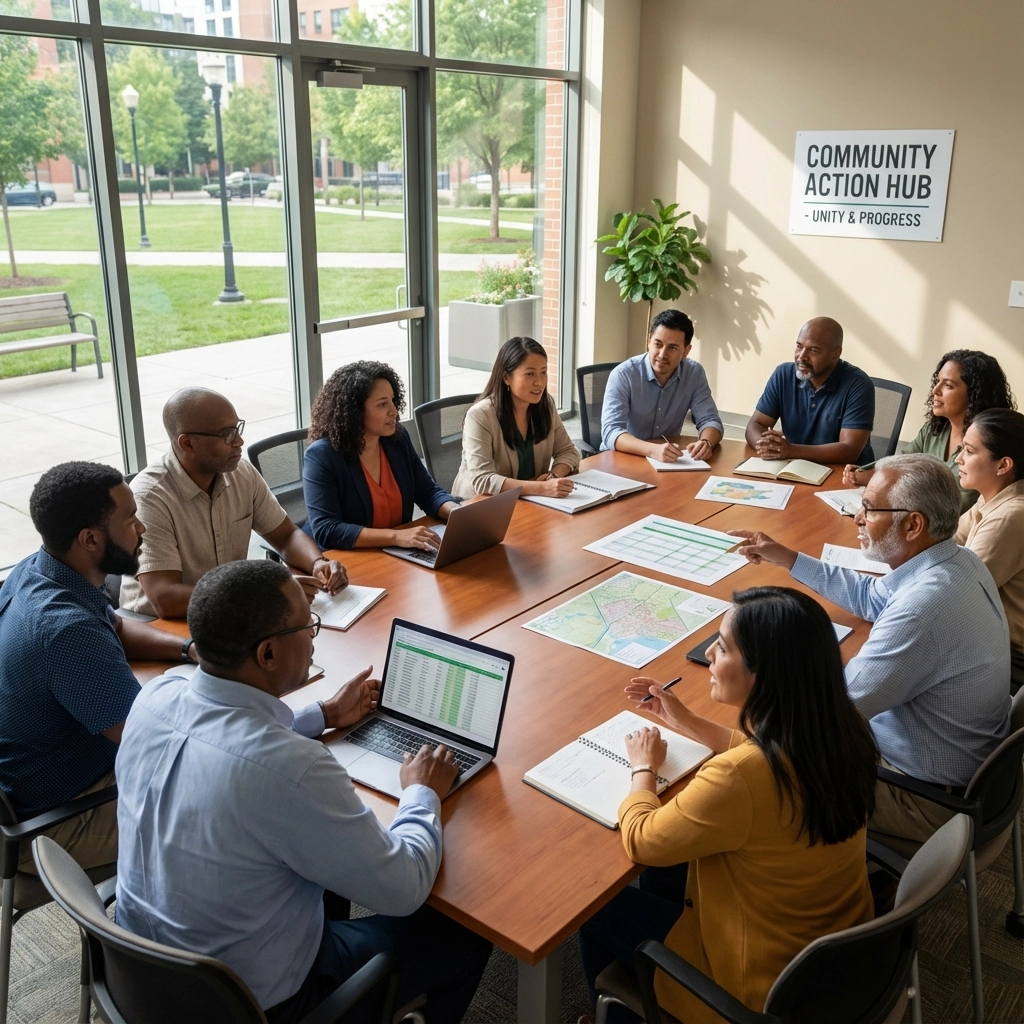
Why coalitions work for major funding:
- Shared credibility: Multiple established organizations backing one vision carries more weight than a single group making big promises
- Risk distribution: Funders see less risk when responsibility is shared across proven leaders
- Broader reach: Coalition members can mobilize different networks and stakeholder groups
- Sustained momentum: If one organization faces challenges, others can maintain progress
Your coalition doesn't need 40 organizations. Start with 3-5 trusted partners who share your vision and have complementary strengths. Focus on organizations that already have community respect and operational experience.
Step 2: Create a Resident-Driven Master Plan
Here's where Rise East separated themselves from typical development projects. Their 10-Year Plan wasn't written in boardrooms: over 400 residents directly shaped every priority and strategy. This wasn't token community input. Residents drove the entire planning process.
The plan identified five core investment areas that came straight from community conversations:
- Economic Power: Small business support, workforce development, cooperative ownership
- Knowledge Power: Educational opportunities, digital equity, skills training
- People Power: Leadership development, civic engagement, organizing capacity
- Cultural Power: Arts spaces, cultural programming, identity preservation
- Political Power: Policy advocacy, electoral participation, systemic change
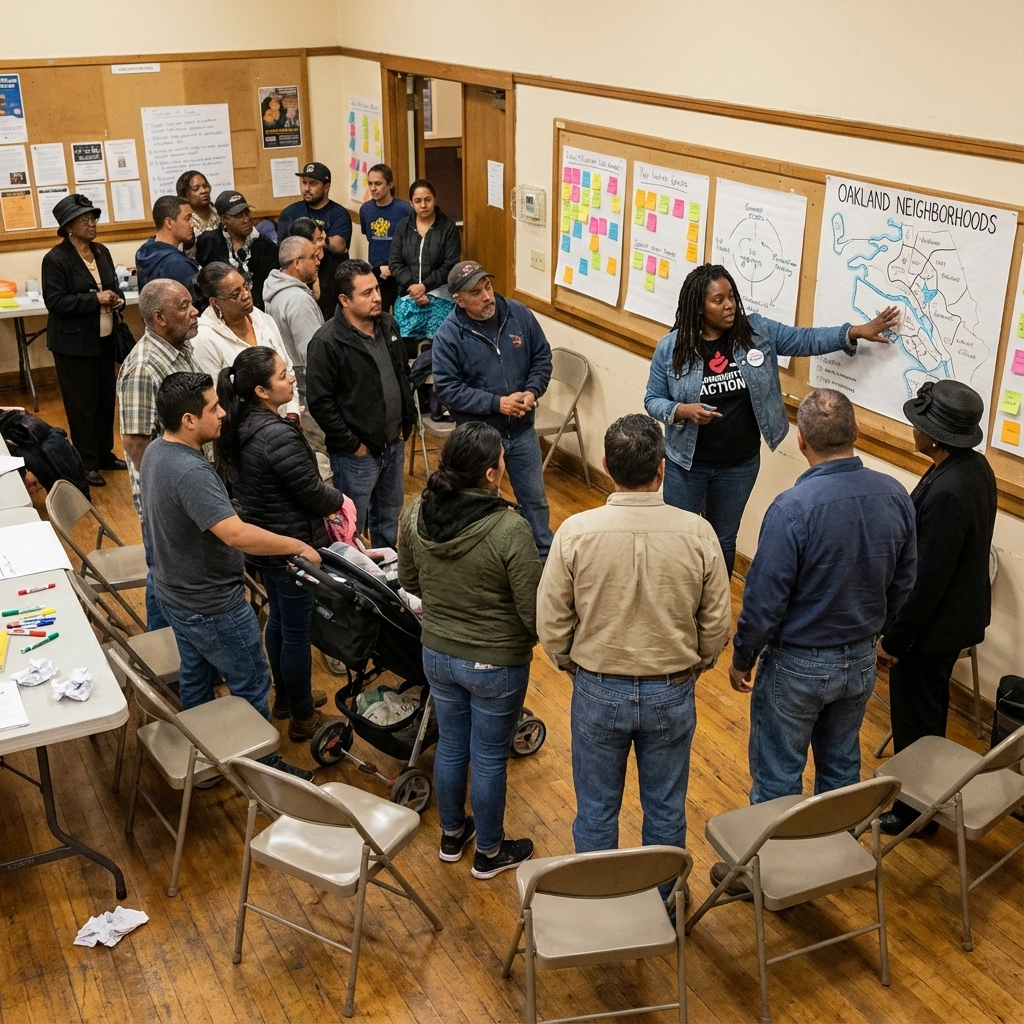
This resident-first approach accomplished two critical things. First, it ensured investment would address actual community needs rather than outside assumptions. Second, it gave funders confidence that capital would be deployed according to community priorities, not external agendas.
Build your own resident-driven plan by:
- Hosting regular community listening sessions in accessible locations
- Using multiple engagement formats (surveys, focus groups, town halls, door-to-door conversations)
- Translating materials into relevant languages
- Providing childcare and food to remove participation barriers
- Creating clear feedback loops so residents see their input reflected in planning documents
Step 3: Secure a Challenge Grant to Unlock Local Investment
In 2023, Blue Meridian Partners offered Rise East something powerful: a $50 million grant with one big condition. The money would only be released if Rise East raised an equal $50 million from local sources within a specific timeframe.
This challenge grant structure was genius. It created urgency and motivation for the community to mobilize local resources they might not have otherwise pursued. Instead of waiting for outside philanthropy, Rise East had to build grassroots support from local foundations, businesses, and individual donors.
Challenge grants work because they:
- Create urgency: Limited time frames motivate action
- Demonstrate commitment: Local matching funds prove community investment
- Leverage resources: Every local dollar unlocked additional external funding
- Build ownership: Local investors have deeper stakes in long-term success
To pursue challenge grants:
- Research foundations that use challenge grant models in your issue area
- Prepare detailed budgets showing how you'll raise matching funds
- Identify potential local funders before applying for the challenge grant
- Create compelling timelines that allow sufficient fundraising time while maintaining urgency
Step 4: Mobilize Diverse Local Funding Sources
Rise East understood that $50 million wouldn't come from one or two large donors. They needed diverse local investment from multiple sources who believed in the vision and had skin in the game.
Leadership, including figures like Carolyn Johnson from the Black Cultural Zone, actively communicated that Rise East represented an opportunity to reclaim community power and ensure resident-driven development rather than displacement-oriented gentrification.
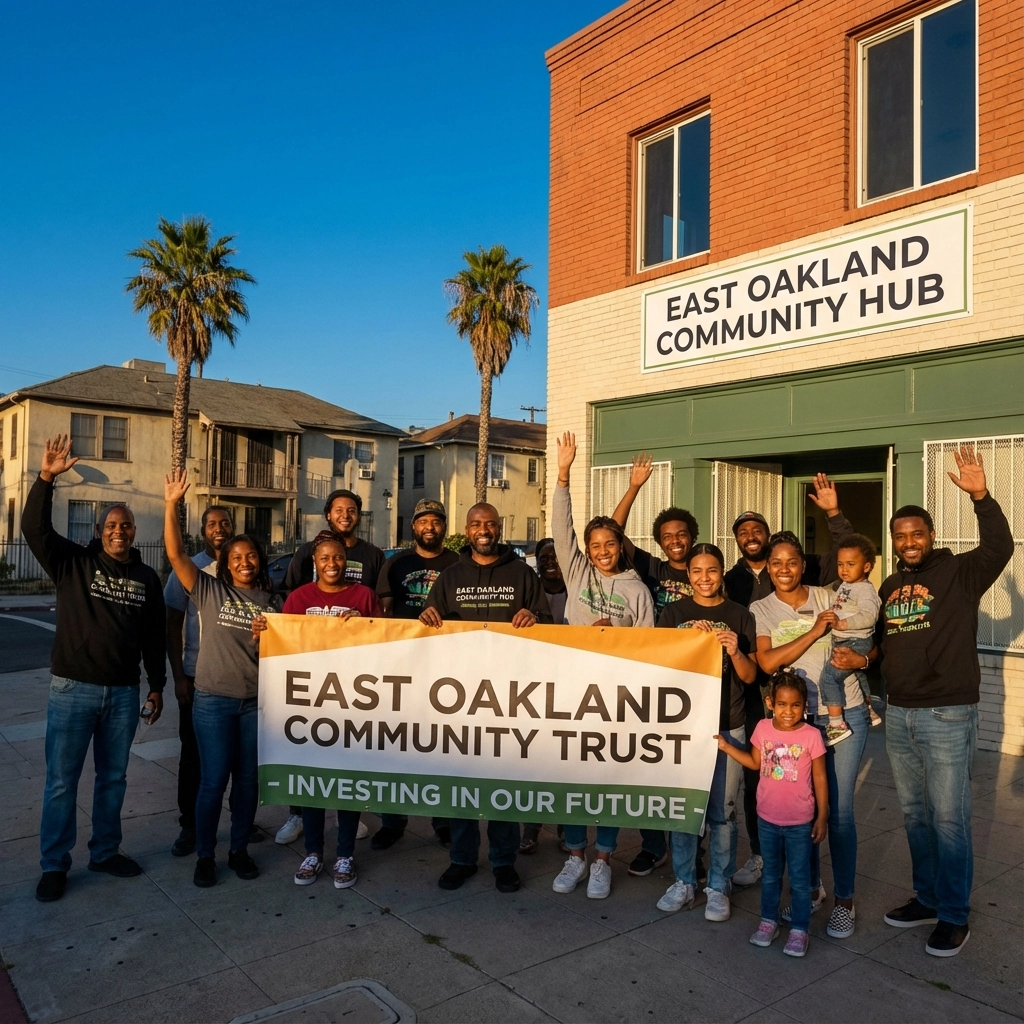
Their local funding strategy included:
- Local foundations with geographic focus on Oakland
- Community businesses that would benefit from neighborhood investment
- Individual donors who lived in or had connections to East Oakland
- Faith communities with congregations in the target area
- Cultural organizations invested in preserving Black community presence
Multiple local funding sources create sustainability because these investors often have deeper long-term commitments to community success. They live in the area, own businesses there, or have family connections that extend beyond typical grant cycles.
Start building your local funding base by:
- Mapping all potential local investors (foundations, businesses, individuals, institutions)
- Researching their funding priorities and past community investments
- Developing different engagement strategies for different donor types
- Creating regular opportunities for potential funders to see your work in action
- Building authentic relationships before you need funding
Step 5: Frame Investment as Systemic Change
Rise East didn't just describe individual projects. They articulated how $100 million would address decades of disinvestment and systemic displacement that had devastated East Oakland's Black community.
The investment plan connected specific programs to broader transformation:
- Affordable housing development to counter displacement and build community wealth
- Youth workforce programs with stipends up to $10,000 to create economic pathways
- Wellness hubs addressing health disparities rooted in environmental racism
- Cultural infrastructure like Liberation Park to preserve Black cultural presence
- Commercial corridor revitalization supporting Black-owned businesses

By connecting individual projects to systemic change and community wealth building, Rise East made clear this wasn't just development: it was reparative justice and economic transformation in a neighborhood that had been systematically disinvested for decades.
Frame your work for systemic impact by:
- Researching the historical context of disinvestment in your community
- Connecting current challenges to past policy decisions (redlining, urban renewal, etc.)
- Describing how your investments will reverse harmful patterns rather than just address symptoms
- Using language that emphasizes community wealth building and resident ownership
- Showing how individual programs connect to broader community transformation
Why This Approach Actually Works
Rise East succeeded because they combined authentic community power with strategic capital deployment. The 40-block target area contains Oakland's densest concentration of Black residents and bears visible legacy of redlining and underinvestment.
Rather than letting external developers impose solutions, Rise East gave residents control over both the narrative and the decisions about their neighborhood's future. This model proves that large-scale community investment is possible when organizations root their efforts in genuine community leadership.
The $100 million is now being distributed over five years with investment already underway: all shaped by resident priorities, not outside interests. Projects are launching based on the community-driven plan, creating the economic and cultural infrastructure that residents actually want.
Your Next Steps
These five steps aren't theoretical: they're the actual strategy Rise East used to secure transformational investment. Your community can adapt this approach regardless of your current capacity or funding level.
Start where you are:
- If you're working alone: Begin building coalition relationships with organizations that share your values
- If you have a small coalition: Focus on deepening resident engagement and developing your master plan
- If you have strong community support: Research challenge grant opportunities and begin mapping local funding sources
- If you have some funding: Use current resources to demonstrate impact and build credibility for larger asks
Remember, Rise East didn't happen overnight. This was years of relationship building, community organizing, and strategic planning that positioned them to take advantage of the Blue Meridian opportunity when it emerged.
The $100 million wasn't the goal: it was the tool. The real success is a Black community in East Oakland taking control of their neighborhood's development and creating lasting change on their own terms.
Your community has that same power. These five steps can help you unlock it.