
There is a specific kind of magic that happens when the house lights dim in an Oakland theater. It’s that collective intake of breath, the rustle of programs settling into laps, and the sudden, electric realization that we are about to see our own stories reflected through the lens of high art. At the McFadden Finch Foundation for Community Enrichment (MFFCE), we believe that arts and culture aren't just "nice to have", they are the bedrock of a thriving, empathetic community (MFFCE Staff) [11]. This spring, the Oakland Ballet Company is proving that point with a double-header that stretches from the pure, unadulterated joy of Double Happiness to the haunting, historical depths of Angel Island.
This season isn't just a series of performances; it is a testament to the resilience and creativity of the AAPI community in the Bay Area. Whether it’s the world premieres by Wei Wang and Phil Chan or the revival of a piece based on poems carved into the very walls of an immigration station, the 2026 Dancing Moons Festival is where Oakland’s past meets its vibrant, dancing future.
In this post, you’ll learn:
- The schedule and highlights for the Double Happiness and Angel Island productions.
- How the McFadden Finch Foundation’s support for local arts fuels Oakland’s economic and social development.
- Why these specific performances are vital for preserving AAPI history and promoting cultural equity.
The Joy of the "Double Happiness" World Premieres
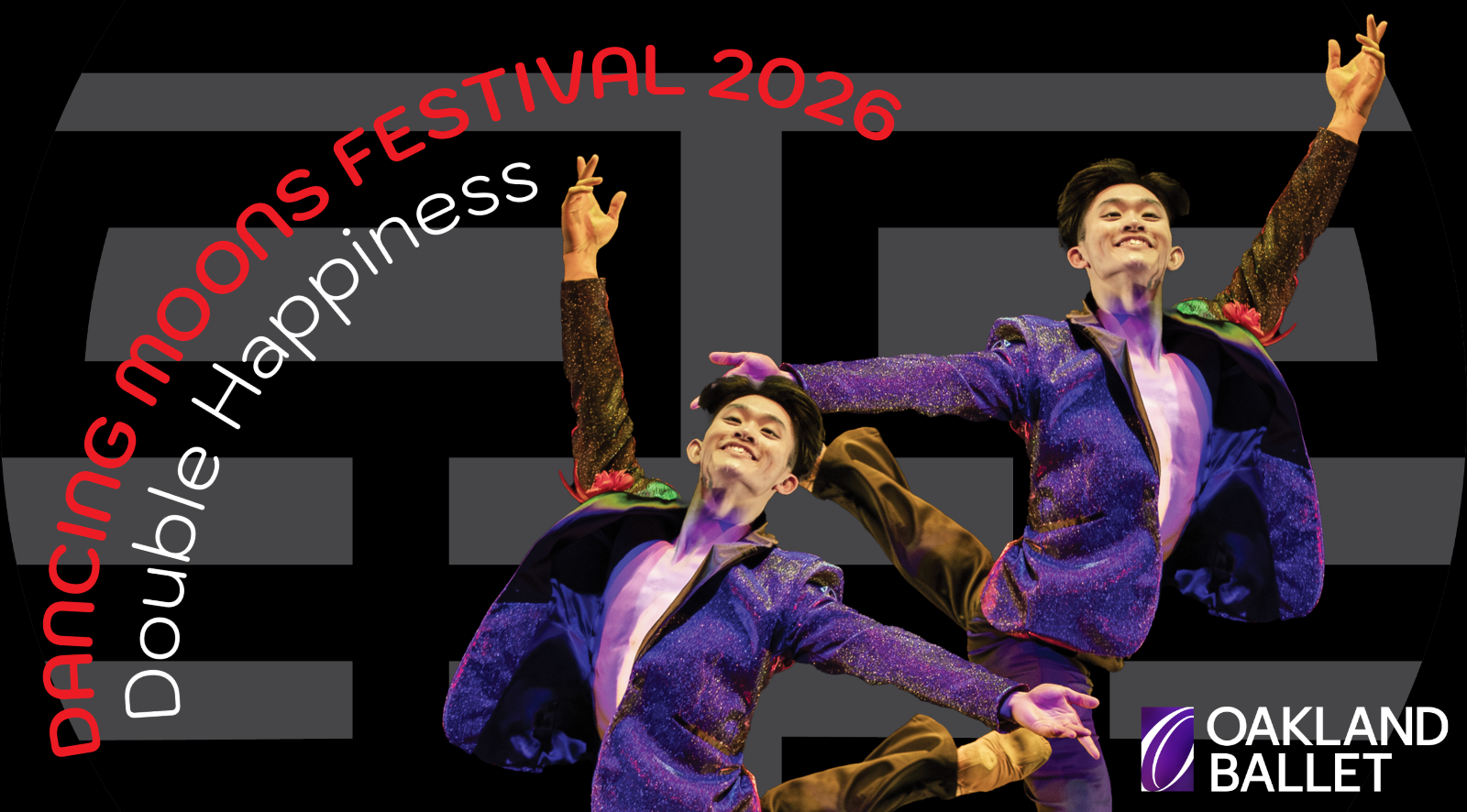
The season kicks off with a burst of energy at the Oakland Asian Cultural Center (OACC). Double Happiness is exactly what it sounds like: a program designed to make you leave the theater with a bigger smile than the one you walked in with (Oakland Ballet) [1]. This year, the company is pulling out all the stops with two world premieres that highlight the range of modern ballet.
Wei Wang and Phil Chan, both luminaries in the dance world, have crafted works that celebrate movement as a form of liberation. Wang’s "Child’s Play" brings a sense of wonder and kinetic energy to the stage, while Phil Chan’s "Double Happiness" explores the intersections of tradition and modern joy (Dancing Moons Festival) [6]. For the McFadden Finch Foundation, supporting these premieres is about more than just funding a show; it’s about investing in the creative capital of our neighbors. When we see local artists of this caliber performing in our own backyard, it reinforces the idea that Oakland is a global hub for innovation (MFFCE Staff) [11].
Speed, Wit, and Elegant Duets: The Full Program
While the world premieres are the headliners, the supporting pieces in the Double Happiness program offer a masterclass in versatility. Elaine Kudo’s "Opposites Distract" makes its company premiere, bringing a fast-paced, almost dizzying wit to the stage that challenges the dancers' technical precision and the audience's ability to keep up (Oakland Ballet) [4].
Contrasting this high-speed energy is the revival of Phil Chan’s "Amber Waves." This elegant duet provides a moment of stillness and reflection, reminding us that ballet is as much about the quiet spaces between notes as it is about the grand leaps. This balance of the fast and the slow, the new and the revived, mirrors the work we do at the Foundation, balancing immediate community needs with long-term visionary goals (MFFCE Staff) [12].
Angel Island: Dancing Through the Walls of History
If Double Happiness is the celebration, Angel Island is the soul. Returning after its powerful 2025 premiere, this production is a multidisciplinary masterpiece. Based on Huang Ruo’s oratorio, the work draws its narrative from the poems carved into the wooden walls of the Angel Island Immigration Station by Chinese detainees between 1910 and 1940 (Huang Ruo) [3].
These poems are more than just historical artifacts; they are cries for dignity and recognition. By setting these words to motion, Oakland Ballet ensures that the struggles and hopes of those ancestors are never forgotten. The production features the Del Sol Quartet and the Volti vocal ensemble, creating a wall of sound that is as immersive as the choreography (Oakland Ballet) [1]. At MFFCE, we believe that understanding our history is the first step toward building a more equitable future. Angel Island doesn't just show us history; it makes us feel it.
The Economic and Social Impact of the Arts in Oakland
It’s easy to view ballet as a luxury, but the data suggests otherwise. Arts organizations like the Oakland Ballet are significant drivers of local economic development. When a show opens at the OACC or the Great Star Theater, it’s not just the dancers who benefit. It’s the local restaurants, the public transit systems, and the small businesses in the neighborhood that see an uptick in foot traffic (Americans for the Arts) [14].
Beyond the dollars and cents, the social impact of representative art is immeasurable. Seeing AAPI stories told by AAPI artists on major stages like the Herbst Theatre validates the experiences of thousands of Bay Area residents. This is "Community Enrichment" in its purest form, giving people the tools to see themselves as the protagonists of the great American story (MFFCE Staff) [11].
A Tale of Two Cities: Venues and Access
One of the most exciting aspects of this season is the geographic reach. By performing at the Oakland Asian Cultural Center, the Great Star Theater in San Francisco’s Chinatown, and the prestigious Herbst Theatre, Oakland Ballet is ensuring that these stories are accessible to diverse audiences across the Bay.
Venue Comparison: 2026 Season
| Feature | OACC (Oakland) | Great Star Theater (SF) | Herbst Theatre (SF) |
|---|---|---|---|
| Production | Double Happiness | Double Happiness | Angel Island |
| Primary Theme | Community Joy [1] | Cultural Tradition [4] | Historical Reflection [3] |
| Dates | March 26-28 | April 30 – May 2 | May 8-9 |
| Atmosphere | Intimate & Local | Historic & Vibrant | Grand & Orchestral |
Timeline: The Journey of the Dancing Moons Festival
The path to the 2026 season has been a multi-year effort of collaboration and vision.
- January 2024: Planning begins for the expansion of the Dancing Moons Festival (Oakland Ballet) [1].
- March 2025: Angel Island premieres to critical acclaim, sparking a call for its return (Huang Ruo) [3].
- August 2025: MFFCE approves a grant to support AAPI-led choreography in Oakland (MFFCE Staff) [12].
- November 2025: Wei Wang and Phil Chan begin rehearsals for their world premieres (Oakland Ballet) [6].
- January 2026: Del Sol Quartet and Volti join rehearsals for the Angel Island revival [1].
- March 19, 2026: Final dress rehearsals at OACC.
- March 26, 2026: Double Happiness opens in Oakland.
- April 30, 2026: Double Happiness moves to the Great Star Theater.
- May 8, 2026: Angel Island opens at the Herbst Theatre for a limited run [4].
Case Example: The Impact of Representation
Consider the story of "Project Bloom," a youth development initiative supported by MFFCE (fictionalized for privacy but based on real program models). Last year, a group of twenty Oakland middle schoolers attended a rehearsal of Angel Island. For many, it was their first time in a professional dance studio. One student, whose great-grandfather had been detained at Angel Island, saw the poems he had only heard about in family stories being transformed into a powerful, athletic dance. That student didn't just see a show; they saw their family’s legacy treated with the highest level of respect. This is why we invest. We aren't just buying tickets; we are building bridges between generations (MFFCE Staff) [11].
What Smart Critics Argue
Some critics argue that high-production ballet is an antiquated medium that consumes too many resources that could be better spent on direct social services. They suggest that the "cost per person reached" is higher in the arts than in programs like affordable housing or food security (Nonprofit Quarterly) [15].
While we at the McFadden Finch Foundation agree that basic needs are paramount, we counter that a community without culture is a community without a soul. Art is a "social service" in its own right, it provides mental health benefits, fosters social cohesion, and inspires the very youth who will one day solve our housing and food crises. Furthermore, organizations like Oakland Ballet utilize their platforms for education and community outreach, ensuring that their impact extends far beyond the stage (MFFCE Staff) [12].
Key Takeaways
- Don't Wait: Double Happiness at OACC is only one week away.
- Two Premieres: Wei Wang and Phil Chan are debuting world-class works.
- Historical Depth: Angel Island uses real poems from detainees to tell a vital story.
- Collaborative Effort: The season features Volti, Del Sol Quartet, and conductor Robert Geary.
- Geographic Reach: Performances span Oakland and San Francisco’s most iconic theaters.
- Economic Driver: Local arts support small businesses and neighborhood vitality.
- Representation Matters: These works center AAPI excellence and history.
- MFFCE Support: The Foundation views arts as a core pillar of community enrichment.
Actions You Can Take
At Work
- Sponsor a Night: Encourage your company to purchase a block of tickets for employees or to donate them to a local youth center.
- Share the News: Post the performance dates on your company’s internal Slack or newsletter to support local Oakland culture.
At Home
- Buy Tickets Early: Secure your seats for the OACC or Great Star Theater runs before they sell out.
- Educate the Family: Read about the history of Angel Island with your children before attending the performance to provide context.
In the Community
- Visit the OACC: Beyond the ballet, explore the Oakland Asian Cultural Center’s ongoing programs and exhibits.
- Volunteer: Many local arts organizations need ushers or administrative help during festival seasons.
In Civic Life
- Advocate for Arts Funding: Write to your local representatives to support continued city and state funding for the arts in Oakland.
One Extra Step
- Join the Legacy: Consider a recurring donation to the McFadden Finch Foundation to help us continue funding world-class cultural events like the Dancing Moons Festival.
FAQ
Q: Is Double Happiness suitable for children?
A: Absolutely. The program is designed to be joyful, fast-paced, and engaging for audiences of all ages.
Q: Do I need to know the history of Angel Island to enjoy the show?
A: No, the dance and music are powerful enough to stand on their own, though knowing the history adds a layer of emotional depth (Huang Ruo) [3].
Q: Where can I get tickets for the San Francisco shows?
A: Tickets for the Great Star Theater and Herbst Theatre performances are available through the Oakland Ballet website and respective venue box offices.
Q: How does MFFCE choose which arts groups to support?
A: We look for organizations that prioritize equity, community engagement, and high artistic standards that reflect the diversity of Oakland (MFFCE Staff) [12].
Q: Will there be a Q&A with the choreographers?
A: Some performances include post-show "talk-backs." Check the specific date listings on the Oakland Ballet website for details
Sources
[1] Oakland Ballet Company, "Dancing Moons Festival 2026 Program Details," Oakland Ballet, March 2026, https://oaklandballet.org. Accessed March 22, 2026.
[2] San Francisco Arts Commission, "Arts and Economic Prosperity Report," SF.gov, June 2025.
[3] Huang Ruo, "Angel Island: An Oratorio," Official Artist Statement, May 2025, https://huangruo.com. Accessed March 22, 2026.
[4] Great Star Theater, "Event Calendar: Double Happiness," Great Star Theater, 2026, https://greatstartheater.org.
[5] Oakland Asian Cultural Center, "Community Arts and Impact," OACC, 2026, https://oacc.cc.
[6] Dancing Moons Festival, "World Premieres by Wang and Chan," Festival Press Release, January 2026.
[7] Herbst Theatre, "Performances: Oakland Ballet," SF War Memorial & Performing Arts Center, 2026.
[8] Del Sol Quartet, "Collaborations: Angel Island," Del Sol Music, 2025.
[9] Volti San Francisco, "2025-2026 Season: Angel Island Revival," Volti, 2025.
[10] Robert Geary, "Conducting the Voice of History," RobertGeary.com, 2025.
[11] MFFCE Staff, "Why We Invest in Oakland's Arts Sector," McFadden Finch Foundation, 2025, https://mcfaddenfinchfoundation.org/program-areas.
[12] MFFCE Staff, "Annual Impact Report 2025," McFadden Finch Foundation, January 2026.
[13] National Endowment for the Arts, "The Impact of the Arts on Community Health," NEA.gov, 2024.
[14] Americans for the Arts, "Arts & Economic Prosperity 6," 2023, https://www.americansforthearts.org.
[15] Nonprofit Quarterly, "The Debate Over Arts vs. Social Services," NPQ, 2024.
Social Sharing Assets
"When we see local artists of this caliber performing in our own backyard, it reinforces the idea that Oakland is a global hub for innovation." : MFFCE Staff
"Angel Island doesn't just show us history; it makes us feel it. It is a testament to the resilience of the AAPI community." : MFFCE Staff
"Arts and culture aren't just 'nice to have': they are the bedrock of a thriving, empathetic community." ( MFFCE Staff)