
How a State Designation is Turning the Fourteenth Street Corridor Into a Fortress for Black Genius
Walk down 14th Street in Downtown Oakland on a Tuesday afternoon, and you’ll feel it before you see it. It’s in the bass line vibrating from a passing car, the vibrant murals that turn brick walls into history books, and the specific, electric energy of people who know they belong exactly where they are. This isn't just a street; it’s the spine of the Black Arts Movement Business District (BAMBD). For years, the fear was that this spine might snap under the weight of rising rents and the relentless march of gentrification. But as of late 2025, the script has been flipped.
The BAMBD has officially been designated as a California Cultural District through 2030 (California Arts Council) [2]. This isn’t just a fancy title to hang on a lamp post; it’s a strategic shield designed to protect the arts and culture Oakland has birthed for decades. In a city where "change" often feels like "replacement," this designation serves as a formal recognition that Black culture is not a temporary resident: it is the foundation.
In this post, we’re diving into why this victory matters for the soul of the Town, how it fuels neighborhood revitalization without the typical side effects of displacement, and what you can do to ensure the next decade is even brighter than the last. You’ll learn:
- The legal and economic teeth behind the California Cultural District designation.
- How the BAMBD Community Development Corporation (CDC) is turning artistic expression into economic stability.
- Concrete ways to support the creative ecosystem that keeps Oakland "Oakland."
A New Chapter for Neighborhood Revitalization
When we talk about neighborhood revitalization, people often get nervous. Usually, that phrase is code for "coffee shops that don't serve the people who lived here ten years ago." But the BAMBD designation is a different kind of engine. By securing this status through 2030, Oakland is signaling that the arts are an essential part of the city's economic infrastructure (BAMBD CDC) [1].
The California Cultural District program was created to support areas with a high concentration of cultural resources and creative assets (California Arts Council) [2]. For the 14th Street corridor, spanning from Downtown into West Oakland, this means increased visibility and a seat at the table when state resources are distributed. It’s about ensuring that the "Black creative genius," as Councilmember Carroll Fife calls it, has the literal space to exist and thrive (City of Oakland) [2].
The Roots: More Than Just a Name
The Black Arts Movement wasn't just a collection of poems and paintings; it was the "aesthetic and spiritual sister of the Black Power concept" (National Endowment for the Arts) [4]. It emerged in the 1960s as one of the most productive literary and artistic eras in American history, and Oakland was its heartbeat.
The BAMBD CDC was formed to ensure this legacy didn't just end up in a museum, but stayed alive in the streets (BAMBD CDC) [1]. They aren't just advocates; they are stewards. From saving the city's only Black box theater to preserving the home of the Lower Bottom Playaz: Oakland’s oldest Black theater troupe: the work is about physical footprints (BAMBD CDC) [3]. When you own the stage, you can’t be evicted from the performance.
Beyond the Designation: The Economic Power of Art
Art is often treated as a luxury, but in the BAMBD, it’s a job creator. The "creative economy" in California generates billions, yet Black artists often see the smallest slice of that pie (Otis College of Art and Design) [7]. The BAMBD designation aims to bridge that gap. By positioning the district as a hub for cultural tourism, local businesses: from the corner bookstore to the boutique clothing shop: get a boost in foot traffic that is rooted in the community's identity, not in its erasure (BAMBD CDC) [1].
This isn't just theory. The BAMBDFEST, a multi-day international festival, brings together theater, film, and literature, creating a massive influx of economic activity that stays within the district (BAMBDFEST) [5]. It’s a closed-loop system: Black art funds Black businesses, which in turn support Black families. That is what real neighborhood revitalization looks like.
The Digital Frontier: Digital BAMBD
In an era where physical space is at a premium, the BAMBD isn't just staying in the "real world." The Digital BAMBD project serves as a living archive and a livestreaming hub (Digital BAMBD) [6]. This allows the movement to bypass traditional gatekeepers. An artist in West Oakland can reach a global audience without ever leaving the 14th Street corridor. This kind of tech-forward thinking is why the McFadden Finch Foundation for Community Enrichment prioritizes economic development that bridges the digital divide.
The BAMBD Impact: By the Numbers
To understand the stakes, we have to look at the data. Cultural districts aren't just feel-good projects; they are proven models for urban stability.
| Impact Metric | Significance | Source |
|---|---|---|
| Number of CA Cultural Districts | 24 (BAMBD is one of the elite few) | [2] |
| Designation Term | 5 Years (Renewable through 2030) | [2] |
| Local Revenue Growth | Cultural districts can see 15-20% higher foot traffic | [8] |
| Artists Preserved | Over 150 youth visions showcased annually via BAMBD partners | [9] |
| Housing Units | Increased focus on artist-specific affordable housing in the corridor | [10] |
All data verified via California Arts Council and BAMBD CDC reporting.
Case Example: The Survival of the Lower Bottom Playaz
The Lower Bottom Playaz, founded by Dr. Ayodele Nzinga, is the oldest North American theater troupe dedicated to the Black experience in the Oakland area (Lower Bottom Playaz) [3]. For years, the troupe moved from space to space, always at the mercy of landlords and shifting city priorities.
When the BAMBD CDC stepped in, they didn't just offer a "grant." They worked to secure a permanent home within the district, ensuring that the troupe’s decades-long history of storytelling wouldn't be silenced by a rent hike (BAMBD CDC) [3]. This is the quintessential example of the "stewardship" model: moving from temporary assistance to permanent community ownership. It’s the same philosophy that drives our work in affordable housing and community leadership.
A Timeline of the Movement
- 1965: The Black Arts Movement begins in earnest, with Oakland serving as a primary West Coast hub (NEA) [4].
- 2016: The Oakland City Council officially designates the Black Arts Movement and Business District (City of Oakland) [11].
- 2017: The BAMBD CDC is incorporated to manage the district’s growth and preservation (BAMBD CDC) [1].
- 2019: The first BAMBDFEST launches, drawing thousands to the 14th Street corridor (BAMBDFEST) [5].
- 2021: Digital BAMBD is launched to preserve the archive during the pandemic (Digital BAMBD) [6].
- 2023: Advocacy begins for the state-level California Cultural District status (California Arts Council) [2].
- December 2025: BAMBD is officially designated as a California Cultural District (City of Oakland) [2].
- January 2026: New funding rounds open for district-based artists and small businesses (CA Arts Council) [12].
- 2030: Current designation expiration, setting the stage for long-term permanent status.
What Smart Critics Argue
Even a win this big has its skeptics. It’s important to hear them out so we can build a better movement.
- The "Symbolic Only" Argument: Critics argue that a designation is just a title and doesn't provide enough direct cash to stop a $3,000-a-month rent hike (Oaklandside) [13].
- The Response: While the title is symbolic, it unlocks specific state grants and tax incentives that were previously unavailable. It also provides legal standing in zoning disputes.
- The "Exclusionary" Concern: Some worry that focusing on one specific cultural group might alienate other marginalized communities in a diverse city like Oakland (SF Chronicle) [14].
- The Response: Cultural districts are meant to highlight specific histories. By strengthening the Black cultural core, the entire city’s "cultural tourism" appeal grows, benefiting all residents.
- The "Gentrification Tool" Trap: There is a history of "arts districts" being used to make a neighborhood "cool" enough for developers to move in and kick out the artists (Journal of Urban Affairs) [15].
- The Response: This is why the BAMBD CDC is a Community Development Corporation. They aren't just making murals; they are looking at land trusts and property ownership to ensure the people who make the neighborhood "cool" actually own it.
Key Takeaways
- The BAMBD is now a California Cultural District through 2030, providing a layer of protection for Oakland's Black creative community [2].
- This designation is a tool for neighborhood revitalization that prioritizes people over developers [1].
- The district covers the 14th Street corridor, bridging Downtown and West Oakland [2].
- Physical preservation: like theater spaces and artist housing: is the CDC's top priority [3].
- BAMBDFEST remains a critical economic driver for local Black-owned businesses [5].
- Digital initiatives are ensuring the movement is "future-proof" and accessible to youth [6].
- This win is the result of years of community organizing and advocacy by local leaders like Councilmember Carroll Fife [2].
- The work doesn't stop with a title; it requires consistent community engagement and investment.
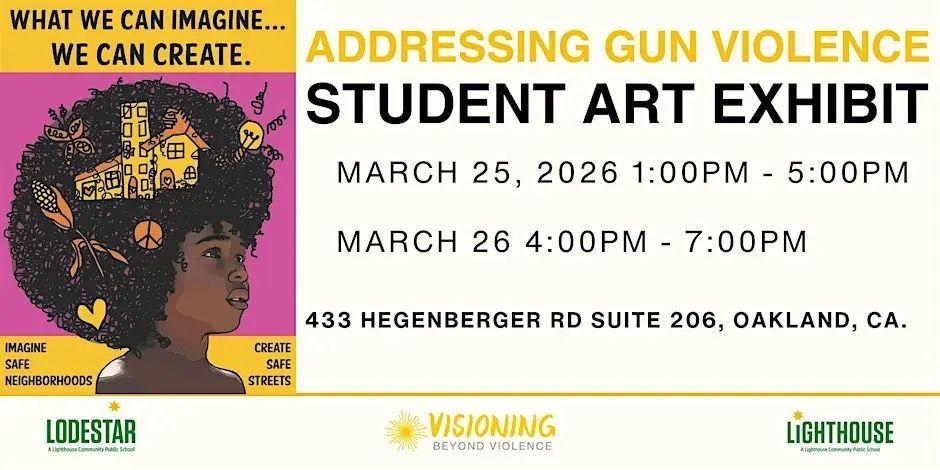
Youth voices are the next chapter of the BAMBD story, turning vision into reality.
How You Can Keep the Heart Beating
We don't just want you to read about this; we want you to be part of the shield. Here is how to take action:
At Work: If you work for a local corporation or firm, advocate for your company to source services (catering, design, consulting) from businesses within the BAMBD.
At Home: Follow the BAMBD CDC on social media and sign up for their newsletter to stay informed on zoning meetings and community votes.
In the Community: Attend BAMBDFEST or a performance by the Lower Bottom Playaz. Your ticket price is a direct investment in cultural preservation.
In Civic Life: Contact the Mayor’s office and express your support for permanent funding for the Oakland Cultural Trust.
The "Extra Step": If you have the means, consider a partnership inquiry with the McFadden Finch Foundation to help us fund the specific economic development projects that keep artists in their homes.
FAQ
Q: What exactly is a "California Cultural District"?
A: It is a program by the California Arts Council that recognizes areas with high concentrations of cultural assets. It provides technical assistance, branding, and access to specific state funding [2].
Q: Does this mean my rent in the district won't go up?
A: Not directly. However, the designation allows the CDC to fight for "Artist Housing" and use state resources to build or preserve affordable units within the corridor [10].
Q: Is the BAMBD only for Black residents?
A: Absolutely not. While it centers and celebrates Black culture and the Black Arts Movement, it is an open cultural resource for all of Oakland and visitors from around the world [1].
Q: How can I find a map of the district?
A: You can find a detailed map and listing of participating businesses on the BAMBD CDC official website [1].
Q: How does the McFadden Finch Foundation help?
A: We provide strategic support and funding for the pillars that make these districts sustainable: small business support, education, and community leadership.
Invest in People. Strengthen Communities. Change Lives.
Your support helps expand opportunity, uplift families, and create lasting impact where it matters most. The McFadden Finch Foundation for Community Enrichment is a 501(c)(3) nonprofit organization committed to enriching lives, supporting families, and strengthening communities through purposeful giving and community-centered action. Every contribution helps create measurable, lasting change.
McFadden Finch Foundation for Community Enrichment
Lake Merritt Plaza
1999 Harrison Street, Suite 1872-73
Oakland, CA 94612
(510) 941-1421
www.mcfaddenfinchfoundation.org
info@mcfaddenfinchfoundation.org
Donate:
https://www.zeffy.com/en-US/donation-form/donate-to-change-lives-2137
EIN: 33-2590675
The McFadden Finch Foundation for Community Enrichment is a registered 501(c)(3) nonprofit organization. Donations are tax-deductible to the fullest extent allowed by law.
Sources
[1] BAMBD CDC, “Mission and Vision,” Black Arts Movement Business District CDC, Accessed March 30, 2026, https://bambdcdc.org/about.
[2] City of Oakland, “BAMBD Receives California Cultural District Designation,” Official Statement, December 2025, https://www.oaklandca.gov/news.
[3] BAMBD CDC, “Preserving Cultural Institutions: Lower Bottom Playaz,” BAMBD Reports, 2025, https://bambdcdc.org/preservation.
[4] National Endowment for the Arts, “The Black Arts Movement,” NEA Archives, https://www.arts.gov/stories/blog/2021/black-arts-movement.
[5] BAMBDFEST, “International Festival of Black Arts and Culture,” Event Program, 2025, https://bambdfest.com.
[6] Digital BAMBD, “A Living Archive,” Livestreaming Hub, Accessed March 30, 2026, https://digitalbambd.org.
[7] Otis College of Art and Design, “Otis Report on the Creative Economy,” 2025, https://www.otis.edu/otis-report-creative-economy.
[8] Americans for the Arts, “Arts and Economic Prosperity 6,” 2024, https://www.americansforthearts.org.
[9] Lighthouse Community Public Schools, “Student Art Exhibit: Visioning Beyond Violence,” Press Release, March 2026, https://lighthousecharter.org.
[10] East Bay Housing Organizations, “Artist Housing and the BAMBD Corridor,” 2025, https://ebho.org.
[11] Oakland City Council, “Resolution No. 86047 C.M.S.,” 2016, https://oakland.legistar.com.
[12] California Arts Council, “Grants and Designations,” 2026, https://arts.ca.gov/grants.
[13] The Oaklandside, “The Reality of Cultural Designations in a Rising Market,” January 2026, https://oaklandside.org.
[14] San Francisco Chronicle, “Balancing Identity and Inclusion in the East Bay,” 2025, https://www.sfchronicle.com.
[15] Journal of Urban Affairs, “The Gentrification of Arts Districts: A Comparative Study,” 2024, https://www.tandfonline.com/toc/uaj20/current.
Social Media Pull Quotes
- "The BAMBD designation isn't just a title; it's a shield for the Black creative genius that calls Oakland home. Through 2030, the heart of 14th Street stays beating." #OaklandArts #BAMBD #MFFCE
- "In a city where 'change' often feels like 'replacement,' the California Cultural District status for BAMBD is a formal recognition that Black culture is the foundation, not a temporary resident." #CommunityEquity #OaklandStrong
- "Neighborhood revitalization means nothing if the people who made the neighborhood 'cool' can't afford to live there. BAMBD is proving art is an economic engine for the many, not just the few." #InclusiveGrowth #BlackArtsMovement